
Symptoms of Macular Degeneration in the Macula
Macular degeneration in the macula reduces central vision and may increase fall risk in older adults [1]. Detailed vision is affected while peripheral vision is usually preserved.
Early Symptoms
Symptoms often develop gradually, especially in dry AMD.
Common early signs include:
-
Blurred vision in the center
-
Difficulty reading small print
-
Increased need for bright light
-
Reduced contrast sensitivity
Many people first notice difficulty reading despite having the correct glasses.
Distorted Lines
A typical symptom is that straight lines appear bent or wavy.
This may be noticed when:
-
Tile lines look uneven
-
Door frames seem curved
-
Text appears distorted
This is an important warning sign, especially in wet AMD.
Dark or Blurred Spot in the Center
As the disease progresses, a dark or blurred spot may appear in the center of vision.
This can lead to:
-
Difficulty recognizing faces
-
Trouble reading entire words
-
Problems seeing fine details
Peripheral vision is usually preserved.
Rapid Vision Loss in Wet AMD
In the more aggressive form, wet AMD, vision can deteriorate quickly.
Symptoms may include:
-
Sudden worsening of central vision
-
Increased distortion
-
Rapid development of a dark central spot
This requires prompt medical evaluation.
Symptoms and Aging
The risk of macular degeneration increases significantly after age 65 [1]. Because the condition mainly affects older adults, it often occurs alongside other age-related changes.
Macular Degeneration and Fall Risk
Reduced central vision affects:
-
Depth perception
-
Contrast sensitivity
-
The ability to judge steps and level changes
This may make it harder to:
-
See the edge of a step
-
Detect uneven flooring
-
Judge distances accurately
Research shows that visual impairment is associated with increased risk of falls and fractures in older adults [2].
When to Seek Medical Care
Seek medical attention if you notice:
-
Distorted straight lines
-
Sudden worsening of central vision
-
A dark spot in the center of your vision
Early detection is especially important to slow disease progression.
More information is available via 1177 Vårdguiden [1].
Safety alarm with automatic fall alarm can increase safety for people with an increased risk of falling
Sensorem’s personal alarm is an example of a technical aid specially developed for people who have an increased risk of falling. The personal alarm can automatically trigger the alarm in the event of a fall and then call relatives using the watch’s built-in speakerphone with two-way communication. The personal alarm works outdoors and has built-in GPS positioning so that relatives can see the user’s position on a map in the Sensorem app.
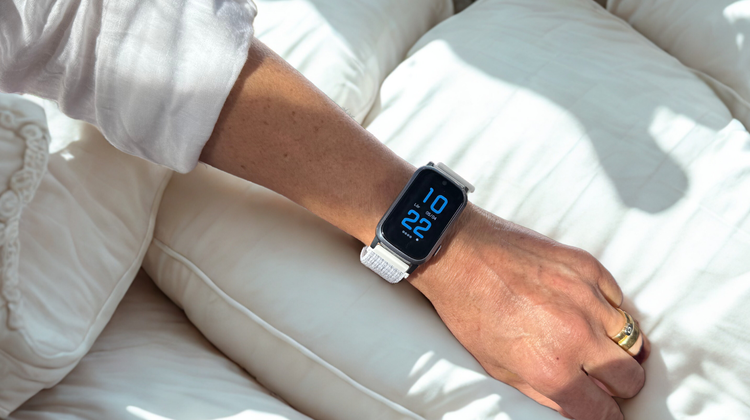
READ ABOUT HOW SENSOREM’S PERSONAL ALARM AUTOMATICALLY CAN DETECT A FALL
Sources:
- 1177 Vårdguiden – Macular degeneration (AMD).
- Public health data on falls among older adults.