
What Is Macular Degeneration in the Macula?
Macular degeneration is an age-related disease that affects the macula in the retina, reduces central vision, and may increase fall risk in older adults [1]. Detailed vision is impaired while peripheral vision is usually preserved.
The Difference Between Macular Degeneration, Cataract and Glaucoma
Eye diseases are often confused. Here is the difference:
-
Cataract: The lens becomes cloudy → blurred and hazy vision.
-
Glaucoma: The optic nerve is damaged → visual field loss, often peripheral.
-
Macular degeneration (AMD): The center of the retina is damaged → reduced central vision.
Cataract affects the lens, glaucoma affects the optic nerve, and AMD affects the central retina (macula).
Macular Degeneration (AMD): Impact on Vision and Number of People Affected in Sweden
When the macula is damaged, a person may experience:
-
A blurred or dark spot in the center of vision
-
Difficulty reading despite correct glasses
-
Distorted straight lines
-
Problems recognizing faces
-
Reduced contrast sensitivity
In Sweden, approximately 300,000–350,000 people are estimated to have some form of macular degeneration. Around 90,000–100,000 have the more advanced late-stage form [1].
Prevalence increases significantly with age and is much higher after age 75.
How Does Aging Affect the Disease?
Age is the most important risk factor for AMD.
With increasing age:
-
Blood circulation in the retina changes
-
Waste products (drusen) accumulate
-
The cells’ ability to repair themselves declines
This can lead to gradual breakdown of the macula.
There are two main forms:
-
Dry AMD – develops slowly and is most common
-
Wet AMD – more aggressive and may cause rapid vision loss
Macular Degeneration and Fall Risk
Even though peripheral vision is often preserved, reduced central vision can affect:
-
Depth perception
-
Contrast sensitivity
-
The ability to judge steps and level differences
People with AMD may have difficulty:
-
Seeing the edge of a step
-
Detecting uneven flooring
-
Judging distances accurately
Research shows that visual impairment is associated with increased risk of falls and fractures in older adults [2].
Because AMD primarily affects older individuals, it often coexists with other fall risk factors such as impaired balance and muscle weakness.
When Should You Seek Medical Care?
Seek medical evaluation if you notice:
-
Distorted straight lines
-
Sudden worsening of central vision
-
A dark spot in the center of your vision
Early detection is particularly important in wet AMD, where treatment can slow progression.
More information is available via 1177 Vårdguiden [1].
Safety alarm with automatic fall alarm can increase safety for people with an increased risk of falling
Sensorem’s personal alarm is an example of a technical aid specially developed for people who have an increased risk of falling. The personal alarm can automatically trigger the alarm in the event of a fall and then call relatives using the watch’s built-in speakerphone with two-way communication. The personal alarm works outdoors and has built-in GPS positioning so that relatives can see the user’s position on a map in the Sensorem app.
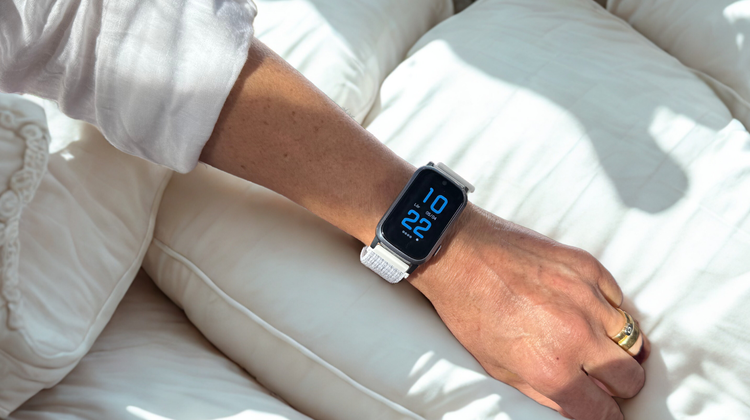
READ ABOUT HOW SENSOREM’S PERSONAL ALARM AUTOMATICALLY CAN DETECT A FALL
Sources:
- 1177 Vårdguiden – Macular degeneration (AMD).
- Public health data on falls among older adults.