
5 early signs of alzheimer
Alzheimer’s is the most common form of dementia and accounts for approximately 60–80% of all dementia cases. It is a progressive disease that most often affects older adults. Recognising the early signs is critical – early diagnosis and treatment can make a significant difference for both the person affected and their family.
Normal Forgetfulness or Early Alzheimer’s – What’s the Difference?
It is normal to forget things occasionally. You might misplace your glasses or forget a name. It is frustrating but does not affect daily life on any deeper level.
With Alzheimer’s, memory problems look different. The person does not just forget individual details – they forget entire events, ask the same question repeatedly, or cannot find their way home in familiar surroundings. It is persistent, worsens gradually, and affects the ability to manage everyday life.
If you recognise the pattern below in yourself or a loved one – and it has been going on for more than six months – it is time to contact a doctor.
The 5 Early Signs of Alzheimer’s
1. Memory loss
One of the most characteristic signs is memory loss, especially short-term memory. The person may have difficulty remembering recently learned information or important events, or asks the same question repeatedly. They may forget the names of close family members or friends, which can lead to confusion and anxiety.
2. Difficulty making decisions and carrying out everyday tasks
Alzheimer’s affects the ability to think, reason and carry out everyday tasks. Planning a meal, paying bills or following a recipe made hundreds of times may become impossible. Tasks that previously ran on autopilot now require great effort.
3. Changes in language and communication
The person may have difficulty finding the right words, following a conversation or keeping up with discussions. It is common to repeat the same thing over and over without noticing, or to stop mid-sentence and not find a way back. Reading and writing may also become harder.
4. Confusion and disorientation
Confusion about time, place or person is an early warning sign. The person may no longer recognise familiar places, forget what year or season it is, or not understand where they are – even when they are at home.
5. Changes in mood and behaviour
Personality changes are common. The person may become irritable, anxious, depressed or suspicious without apparent reason. It is also common to withdraw from social situations and lose interest in hobbies and activities they previously enjoyed.
Alzheimer’s and the Course of the Disease
Alzheimer’s is a progressive disease with different stages. The symptoms above are typical of the early stage. There are different types of dementia and Alzheimer’s is just one of them, which is why assessment is always important for an accurate diagnosis. Read more about whether Alzheimer’s is hereditary and 5 early signs of dementia.
When Should You Seek Help?
If you or a loved one are experiencing several of these symptoms and they have persisted for more than six months – contact your GP. An early assessment can clarify what is causing the difficulties and open the door to the right support and treatment in time.
Sensorem’s Personal Alarm – Always There When You Need It
Sensorem’s personal alarm is a technical aid specially developed for people with dementia. The alarm works outdoors and has built-in GPS positioning so that relatives can see the user’s location on a map in the Sensorem app. Relatives are automatically called by the alarm (two-way communication) if the user leaves a predetermined geographical area. The alarm also has a medication reminder and can alert automatically in the event of a fall with the built-in fall sensor.
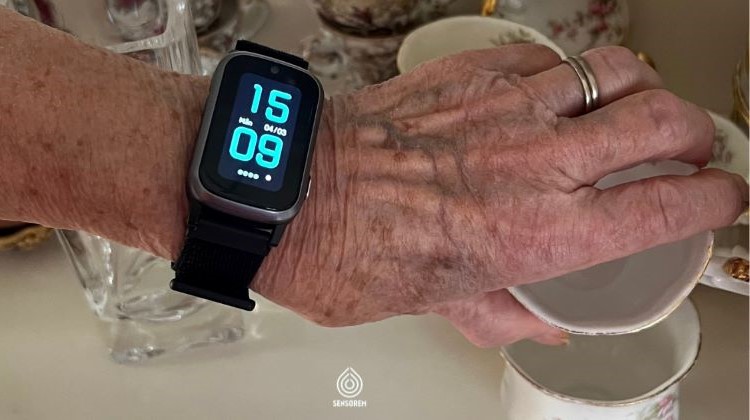
READ ABOUT HOW SENSOREM’S PERSONAL ALARM CAN HELP PERSONS SUFFERING FROM ALZHEIMER’S DISEASE
References
[1] National Board of Health and Welfare. Dementia – national guidelines. https://www.socialstyrelsen.se [2] NHS. Alzheimer’s disease – symptoms and diagnosis. https://www.nhs.uk [3] Alzheimer’s Society. Early signs of dementia. https://www.alzheimers.org.uk
Read more: What is Alzheimer’s? – What is dementia? – 5 early signs of dementia – Is Alzheimer’s hereditary? – Dementia tracker