
What is the Difference Between Senile and Demented?
The terms “senile” and “demented” are often used interchangeably in everyday speech, but they have different meanings. Senile simply refers to ageing, while demented describes someone with a clinical dementia diagnosis. Understanding the difference matters.
The terms “senile” and “demented” are often used synonymously in everyday language, but they have different meanings. Understanding the difference is important to avoid misunderstandings and to offer the right support to older adults experiencing cognitive changes. Read more about different types of dementia.
What does senile mean?
“Senile” derives from the Latin senilis, meaning “of old age”. It has traditionally been used to describe the changes that come with ageing, particularly regarding memory and cognitive ability. Senile is not a medical diagnosis – it is a colloquial term that is often used incorrectly.
In earlier times, it was common to call older people with declining memory “senile”, but this term is vague and does not describe any specific disease. All older adults experience some degree of cognitive decline, but this does not automatically mean they have dementia.
What does demented mean?
“Demented” is a more specific term referring to people with a clinical dementia diagnosis. Dementia is a medical diagnosis involving a noticeable impairment of cognitive functions, such as memory, language and problem-solving, that affects daily life.
Dementia is caused by diseases such as Alzheimer’s, vascular dementia or Lewy body dementia.
The main differences
- Meaning and use: “Senile” is often incorrectly used as a synonym for dementia but simply means “aged”. “Demented” describes a person with a diagnosed dementia condition.
- Medical relevance: “Senile” is not a medical diagnosis. “Demented” is a clinical term for cognitive impairment due to a dementia disease.
- Symptoms and progression: Age-related cognitive decline is a natural part of ageing. Dementia involves significant deterioration that makes it difficult to manage everyday tasks.
- Treatment and prognosis: Natural ageing cannot be stopped, but brain function can be maintained through mental and physical exercise. Dementia diseases are chronic and progressive.
Read more: What is dementia? – Different types of dementia – Alzheimer’s disease – Dementia tracker
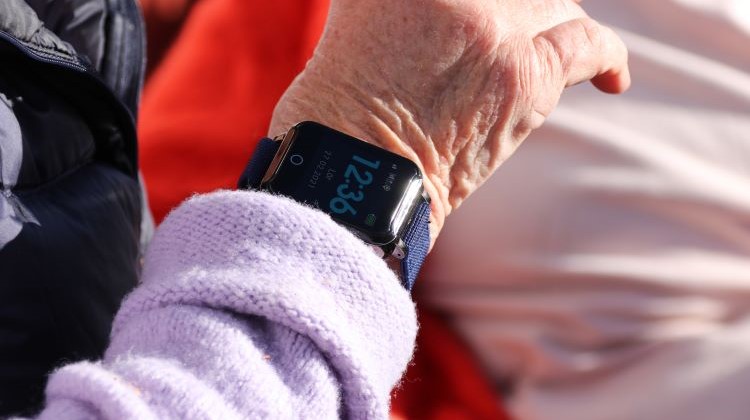
Sensorem’s safety alarm has GPS positioning, medication reminders and automatic fall alarm
Sensorem’s personal alarm is an example of a technical aid specially developed for people with dementia. The personal alarm works outdoors and has built-in GPS positioning so that relatives can see the user’s position on a map in the Sensorem app. Relatives are automatically called by the personal alarm (two-way communication) if the user leaves a predetermined geographical area. The personal alarm also has medication reminders, which means that the watch emits a sound and tells the user that it is time to take their medication. The personal alarm can also alert automatically in the event of a fall with the built-in fall sensor.
READ ABOUT HOW SENSOREMS PERSONAL ALARM CAN HELP WITH DEMENTIA
References
- [1] Alzheimer’s Society. What is dementia? https://www.alzheimers.org.uk
- [2] NHS. Dementia. https://www.nhs.uk
- [3] World Health Organization (WHO). Dementia fact sheet. https://www.who.int