
Is Parkinson’s Disease Fatal?
Parkinson’s disease is a neurological disorder that affects the body’s ability to control movement, along with other vital functions. It is a slowly progressive disease, meaning symptoms worsen gradually over time. But is Parkinson’s disease fatal? The short answer is: not directly. Parkinson’s disease itself is rarely the immediate cause of death, but its complications can lead to life-threatening situations.
A Chronic, Not Acute, Condition
Parkinson’s is a chronic, lifelong condition. It is not acutely fatal like a heart attack or stroke. Many people live for decades with Parkinson’s, especially with proper treatment and support.
What Can Make Parkinson’s Deadly?
The aspects of Parkinson’s that can become life-threatening usually relate to complications as the disease advances:
- Falls: Muscle stiffness, balance problems and weakness significantly increase the risk of serious falls and fractures.
- Pneumonia: Difficulty swallowing, common in later stages, can lead to aspiration – when food or liquid enters the lungs – causing pneumonia, which is one of the most common causes of death in people with Parkinson’s [1].
- Declining overall health: In advanced stages, both physical and cognitive function may deteriorate to the point where the body can no longer cope.
Life Expectancy with Parkinson’s Disease
Research shows that people with Parkinson’s generally have a slightly reduced life expectancy compared to the general population, but the difference is often smaller than expected [2]. Key factors include:
- Age at diagnosis – those diagnosed at a younger age tend to have better outcomes
- Overall health – other medical conditions play a significant role
- Quality of care – good medication management and rehabilitation make a major difference
- Prevention of complications – reducing falls and preventing aspiration pneumonia are crucial
With good care, medication, and lifestyle adjustments, many people with Parkinson’s live long and meaningful lives.
Focus on Quality of Life
While Parkinson’s may shorten life expectancy to some degree, the primary goal of treatment is to maintain quality of life. This means addressing not only physical symptoms but also mental health, social connection, and independence. Through physical therapy, occupational therapy, and the support of caregivers and healthcare professionals, many people remain active well into later life.
Parkinson’s Disease and Fall Risk
One of the most serious risks in Parkinson’s is falling. Muscle stiffness, tremors and balance difficulties make falls more likely, while blood pressure drops can cause sudden dizziness. Falls are not only dangerous in themselves – in people taking blood-thinning medication, injuries can be particularly severe.
How Are Parkinson’s and Dementia Connected?
In later stages of Parkinson’s disease, many individuals experience cognitive decline that can develop into Parkinson’s dementia. This involves memory problems, difficulty concentrating and changes in behaviour. A related diagnosis, Lewy body dementia, combines both motor and cognitive symptoms.
Read more about Parkinson’s symptoms.
A Personal Alarm with Automatic Fall Detection Can Increase Safety for People with a Higher Risk of Falling
Sensorem’s personal alarm is an example of a technical aid specially developed for people who have an increased risk of falling. The alarm can automatically trigger an alert in the event of a fall and then call relatives using the watch’s built-in speakerphone with two-way communication. The alarm works outdoors and has built-in GPS positioning so that relatives can see the user’s position on a map in the Sensorem app.
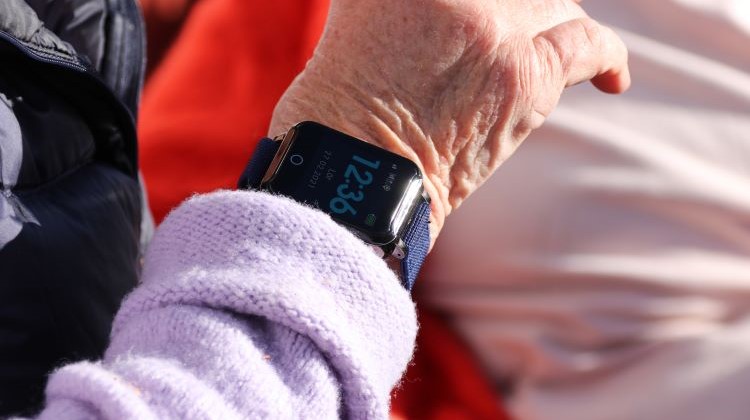
READ ABOUT HOW SENSOREMS PERSONAL ALARM CAN HELP WITH DEMENTIA
References
- [1] Parkinson’s Foundation. Pneumonia and Parkinson’s. https://www.parkinson.org
- [2] Elbaz A, et al. “Survival study of Parkinson disease in Olmsted County, Minnesota.” Archives of Neurology, 2003.
- [3] NHS. Parkinson’s disease – complications. https://www.nhs.uk
Read more: Parkinson’s disease – Parkinson’s symptoms – Lewy body dementia – Automatic fall alarm – Dementia tracker