
How municipalities can reduce falls with welfare technology
Municipalities can reduce falls by combining preventive work with welfare technology that improves monitoring, safety, and response times [1].
Why are falls a major issue for municipalities?
Falls are one of the most common causes of injury among older adults and have significant consequences for both individuals and municipalities. For the individual, a fall can lead to reduced quality of life, increased anxiety, and a greater need for care. For municipalities, falls result in higher costs and increased demand on resources. They often lead to more care interventions, increased home care hours, and sometimes the need for residential care. Fall prevention is therefore not only a healthcare issue, but also a strategic matter for budgeting and planning.
From reactive to proactive fall prevention
In many organizations, fall prevention efforts begin only after an incident has already occurred. A more effective approach is to work proactively. This means identifying individuals at risk early and implementing preventive measures before a fall happens. By combining knowledge of risk factors with the right support in daily life, many falls can be prevented. Welfare technology plays a key role in enabling this shift from reactive to proactive care.
What is welfare technology in practice?
Welfare technology refers to digital solutions that support safety, independence, and efficient care. In practice, this means technology that can enhance monitoring without increasing staff workload. It also enables faster response when incidents occur, while supporting individuals in maintaining independence.
Examples of technology that reduce fall risk
Digital monitoring
Digital monitoring makes it possible to supervise individuals without always being physically present. It is often used at night, when fall risk may be higher and staffing levels are lower. By using digital monitoring, staff can detect changes in behavior or movement patterns at an early stage. This allows intervention before a risk develops into an incident, while also reducing unnecessary disturbances.
Safety alarms and GPS alarms
Safety alarms are a central part of fall prevention because they enable rapid response in case of an incident. For individuals who move outside the home, GPS-based alarms are particularly important. These solutions make it possible to quickly locate a person who cannot return home or is in a risky situation. This reduces the time between an incident and intervention, which is critical in fall scenarios.
Sensors and movement analysis
Sensor-based technology can provide insights into how a person’s movement patterns change over time. Small changes in mobility or activity levels may be early indicators of increased fall risk. By identifying these changes early, care providers can take preventive action. This may include environmental adjustments or changes in care plans.
Benefits for municipalities
Working systematically with welfare technology can lead to several positive outcomes. Most importantly, it can reduce the number of falls and the need for extensive care following an incident. At the same time, resources can be used more efficiently. Staff receive better support in their daily work and can prioritize the right interventions at the right time. This also increases safety for both users and their families, which is a key quality factor in care services.
Key factors for successful implementation
Technology alone does not solve the problem—how it is used determines its effectiveness. Successful implementation requires strong integration into the organization.
This includes ensuring that staff have the right knowledge and that solutions are adapted to individual needs. It is also important to follow up on how the technology is used and what outcomes it delivers, in order to continuously improve practices.
The future of elderly care is data-driven
More municipalities are moving towards a data-driven approach, where technology is used to support decision-making. By combining information about risk factors with insights from digital solutions, interventions can be prioritized more effectively. Fall prevention is an area where this approach can have a significant impact, improving both care quality and resource efficiency.
Reduce fall risk and improve safety with automatic safety alarms
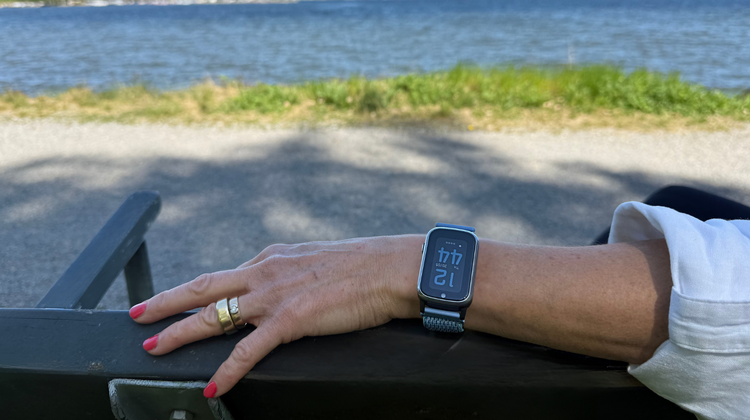
Sensorem’s safety alarm is an example of a solution developed to meet the needs of municipal care. The alarm can automatically detect falls and initiate contact through a built-in speakerphone with two-way communication, enabling quick assessment of the situation. The solution is designed for easy implementation within existing operations, without the need for extensive technical adjustments. With built-in GPS positioning, the alarm works both indoors and outdoors, providing better conditions for locating users and responding quickly to incidents. For organizations, this also means improved oversight and control. Through a centralized alarm management system, all devices can be administered and managed remotely, simplifying operations, follow-up, and scaling across multiple users and services.
LEARN HOW SENSOREM’S SAFETY ALARM CAN IMPROVE SAFETY IN MUNICIPALITIES
Sources
- Swedish National Board of Health and Welfare – Falls among older adults.