
What does a fall cost municipalities?
Falls cost society billions every year. For municipalities, each fall often leads to long-term increases in care costs and resource use [1].
Falls – a major cost driver in municipal care
Falls are one of the leading causes of injury among older adults and represent a significant financial burden for municipalities. In Sweden alone, more than 100,000 falls each year require medical care [1].
The total societal cost is estimated at:
- over SEK 25 billion annually
- with a large share impacting municipal care services
This makes falls one of the most costly – yet preventable – challenges in the welfare system.
Cost per fall – key figures
The cost varies depending on severity, but estimates show:
- A fall with injury: SEK 50,000 – 150,000
- Hip fracture: SEK 200,000 – 400,000 in the first year
- Long-term care needs: can exceed SEK 500,000 per person per year
A single serious fall can therefore quickly exceed half a million kronor in total cost.
Where do the costs arise?
It is easy to focus on hospital care, but for municipalities the largest costs occur after the fall.
Immediate costs
- Emergency response and treatment
- Hospitalization
- Rehabilitation
Long-term costs
- Increased home care needs (often +30–100%)
- Assistive devices and home adaptations
- Short-term care stays
- Permanent residential care
It is this long-term increase in care needs that drives municipal costs.
Falls often lead to permanent care needs
Data shows that many older adults do not return to their previous level of function after a fall.
Common consequences include:
- Increased need for supervision
- Reduced independence
- Higher risk of additional falls
This means the cost is rarely one-time—it often continues for years.
Repeated falls increase costs exponentially
Individuals who fall once have a significantly higher risk of falling again.
This creates a cost escalation over time:
- First fall → increased care needs
- Additional fall → further decline
- Transition to more intensive care
For municipalities, this results in rapidly increasing costs per individual.
Prevention – a clear financial benefit
Preventing falls is in most cases far more cost-effective than managing the consequences.
For example:
- Preventing one hip fracture (~SEK 300,000) can fund preventive measures for multiple individuals
- Fewer falls directly reduce both care costs and staff workload
Fall prevention should therefore be seen as an investment rather than an expense.
Welfare technology as a cost-reduction tool
Welfare technology can play a key role in reducing both the number of falls and their consequences.
By enabling a more proactive approach, municipalities can:
- Identify risks earlier
- Respond faster to incidents
- Reduce the time before assistance is provided
Even small improvements in response time can have a significant impact on both costs and outcomes.
Reduce fall risk and improve safety with automatic safety alarms
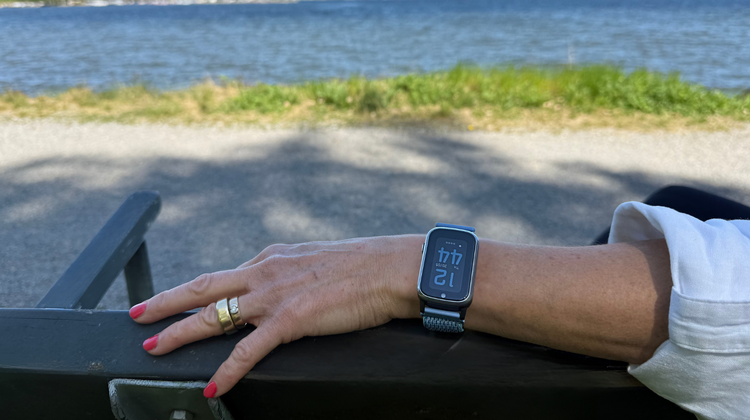
Sensorem’s safety alarm is an example of a solution developed to meet the needs of municipal care. The alarm can automatically detect falls and initiate contact through a built-in speakerphone with two-way communication, enabling quick assessment of the situation. The solution is designed for easy implementation within existing operations, without the need for extensive technical adjustments. With built-in GPS positioning, the alarm works both indoors and outdoors, providing better conditions for locating users and responding quickly to incidents. For organizations, this also means improved oversight and control. Through a centralized alarm management system, all devices can be administered and managed remotely, simplifying operations, follow-up, and scaling across multiple users and services.
LEARN HOW SENSOREM’S SAFETY ALARM CAN IMPROVE SAFETY IN MUNICIPALITIES
Sources
- Swedish National Board of Health and Welfare – Falls among older adults.