
Hip fracture symptoms – how to recognise a broken hip
Do you know the symptoms of a hip fracture? Acting quickly can be critical – every hour spent on the floor increases the risk of serious complications. Here are the key signs to know.
Common symptoms after a fall
The typical symptoms of a hip fracture almost always occur after a fall onto the side. The most common signs are (1):
- Severe pain in the hip or groin – which may radiate down towards the knee
- Inability to get up or rise from the floor
- The injured leg points outward or looks shorter than the other
- Difficulty standing or walking on the affected leg
Many people cannot get up at all. Others can stand but have pain and cannot bear weight on the leg without significant discomfort.
Important warning – not all symptoms are severe
One of the most dangerous misconceptions about hip fracture is that you always feel it immediately with intense pain.
That is not always the case. In what is called an impacted fracture, the break may be relatively stable and the pain mild. The person may even be able to walk a short distance – but if they continue to bear weight on the leg, the fracture can break through completely and the pain can suddenly become extreme (1).
The rule is simple: if an older person has fallen and has any pain in the hip – call 999. Do not wait to see if it passes.
Symptoms that differ in people with dementia
People with dementia or cognitive impairment may struggle to explain where it hurts. Symptoms may present as:
- Sudden refusal to stand or walk
- Agitation or confusion after a fall
- A bent or outward-rotated leg without a clear description of pain
Family members and care staff need to be alert to any change in movement – and not assume the person would have said something if they were in pain.
When to call 999
Call 999 immediately if an older person:
- Has fallen and cannot get up
- Has pain in the hip, groin or thigh after a fall
- Has a leg that points outward or looks shorter
- Is confused or not responding normally after a fall
Do not move the person unnecessarily before the ambulance crew arrives – incorrect handling can worsen any potential injury.
What to do while waiting for the ambulance
Keep the person warm – the risk of hypothermia is real if they have been lying on the floor for a while. Cover them with a blanket if possible. Talk calmly, stay in contact and make sure they know help is on the way.
If the person has a personal alarm with automatic fall detection, family members may already have been alerted – that is exactly the scenario a good alarm is designed for.
Personal alarm for those at increased fall risk
Sensorem’s personal alarm is designed for people with an increased risk of falling. It can be triggered manually or automatically if the person falls, and calls pre-set contacts with two-way voice communication through the watch’s built-in speaker. It works outdoors and has built-in GPS positioning, so you can always see where the person is in the Sensorem app.
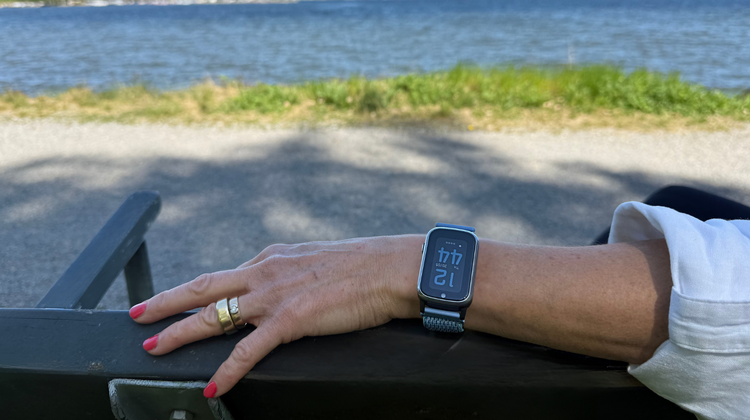
READ ABOUT SENSOREM’S PERSONAL ALARM – SAFETY FOR THOSE AT INCREASED FALL RISK
More about hip fracture
Want to know more? Read more in our guides: What is a hip fracture? – Hip fracture in the elderly – risks and recovery – Personal alarm after hip fracture
References
- [1] NHS. Hip fracture – symptoms and when to get help. https://www.nhs.uk/conditions/hip-fracture/