
What Is Benign Paroxysmal Positional Vertigo?
BPPV causes brief episodes of spinning dizziness triggered by head movements and may increase the risk of falls, especially in older adults [1].
What is BPPV?
Benign paroxysmal positional vertigo (BPPV) is a common cause of dizziness. The condition occurs when tiny calcium crystals in the inner ear become displaced and interfere with the body’s balance system.
What happens in the body with BPPV?
The inner ear contains small crystals that help detect movement and position. In BPPV, these crystals become dislodged and move into the wrong part of the balance canals.
When the head moves, incorrect signals are sent to the brain, creating the sensation that the surroundings are spinning—even when the body is still.
Common symptoms
The most typical symptom is short, intense episodes of dizziness triggered by movement.
Common symptoms include:
- Spinning dizziness when changing position
- Dizziness when lying down or getting up
- Dizziness when turning in bed
- Nausea
Symptoms usually last seconds to a minute but may recur with repeated movements.
When does dizziness occur?
Dizziness in BPPV is often triggered by specific movements, such as:
- Lying down
- Sitting up
- Bending forward
- Turning the head
Between episodes, many people feel relatively normal, although some may experience mild unsteadiness.
BPPV and aging
BPPV can affect people of all ages but is more common in older adults.
With age, the risk of crystal displacement increases, making the condition more frequent after age 60–70. At the same time, the balance system may be more sensitive, which can intensify symptoms.
BPPV and fall risk
The sudden onset of dizziness can lead to loss of balance, especially during everyday movements like standing up or lying down.
Fall risk increases because:
- Symptoms appear suddenly
- Balance is immediately affected
- Routine movements can trigger dizziness
In older adults, where balance and reaction time may already be reduced, the risk of falling is significantly higher.
How is BPPV treated?
BPPV can often be treated with simple repositioning maneuvers that help move the crystals back to their correct location in the inner ear.
Treatment is usually performed by a healthcare professional but can sometimes be done at home after proper instruction. Many people experience quick relief, although symptoms may return.
When should you seek medical care?
Seek medical care if:
- Dizziness is severe or recurring
- You have difficulty maintaining balance
- Symptoms do not improve
- You are unsure of the cause
It is important to rule out other possible causes of dizziness, especially in older adults.
More information is available via 1177 Vårdguiden [1].
Safety alarm with automatic fall alarm can increase safety for people with an increased risk of falling
Sensorem’s personal alarm is an example of a technical aid specially developed for people who have an increased risk of falling. The personal alarm can automatically trigger the alarm in the event of a fall and then call relatives using the watch’s built-in speakerphone with two-way communication. The personal alarm works outdoors and has built-in GPS positioning so that relatives can see the user’s position on a map in the Sensorem app.
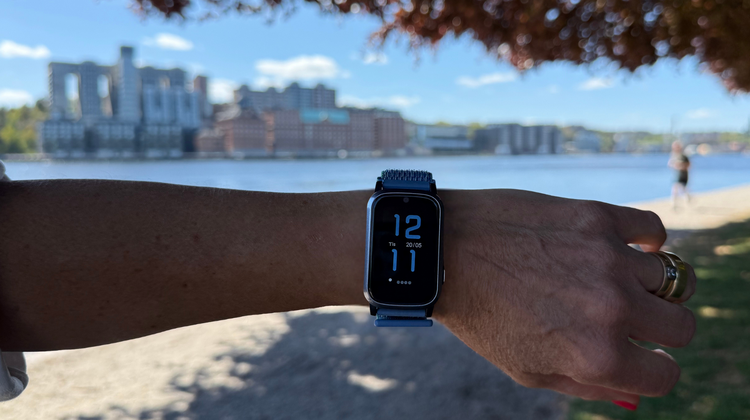
READ ABOUT HOW SENSOREM’S PERSONAL ALARM AUTOMATICALLY CAN DETECT A FALL
Sources:
- 1177 Vårdguiden – Benign paroxysmal positional vertigo (BPPV).