
What is Alzheimer’s?
Alzheimer’s disease is the most common form of dementia and a progressive neurological disease that gradually destroys memory and other important mental functions. It primarily affects older adults and is one of the biggest public health challenges worldwide.
What Is Alzheimer’s Disease?
Alzheimer’s disease is the most common form of dementia, accounting for approximately 60–70% of all dementia cases. It is a progressive neurological disease in which accumulations of proteins – amyloid-beta and tau – in the brain lead to the loss of nerve cells and a gradual decline in memory and cognitive function [1].
The disease typically affects people over 65, though early-onset cases do occur. Women are affected somewhat more often than men.
Symptoms of Alzheimer’s Disease
Early symptoms:
- Memory loss – particularly for recently learned information
- Difficulty finding words in conversation
- Problems with planning and problem-solving
- Confusion about time and place
Later stages:
- Dependence on others for daily activities
- Difficulty recognising family members
- Problems swallowing and walking
- Personality changes and anxiety
Read more about 5 early signs of dementia.
Causes and Risk Factors
- Genetics – certain gene variants increase the risk, notably APOE ε4
- Age – the risk roughly doubles every five years after 65
- Lifestyle factors – high blood pressure, diabetes, smoking and physical inactivity increase the risk
Disease Progression and Life Expectancy
Alzheimer’s disease is divided into three stages – mild, moderate and severe – and the course typically spans 8–10 years, though it can range from 3 to 20 years. Read more about life expectancy with Alzheimer’s.
Diagnosis
Diagnosis is made through a combination of neuropsychological tests (MMSE, MoCA), blood tests and brain imaging (MRI or CT).
Treatment
There is currently no cure, but treatment can slow the progression:
- Cholinesterase inhibitors (e.g. donepezil) – improve signal transmission in the brain
- Memantine – reduces nerve damage in severe dementia
- Non-pharmacological interventions – cognitive stimulation, physical activity, social support
Sensorem’s Personal Alarm with GPS Positioning, Medication Reminder and Automatic Fall Detection
Sensorem’s personal alarm is an example of a technical aid specially developed for people with dementia. The alarm works outdoors and has built-in GPS positioning so that relatives can see the user’s location on a map in the Sensorem app. Relatives are automatically called by the alarm (two-way communication) if the user leaves a predetermined geographical area. The alarm also has a medication reminder and can alert automatically in the event of a fall with the built-in fall sensor.
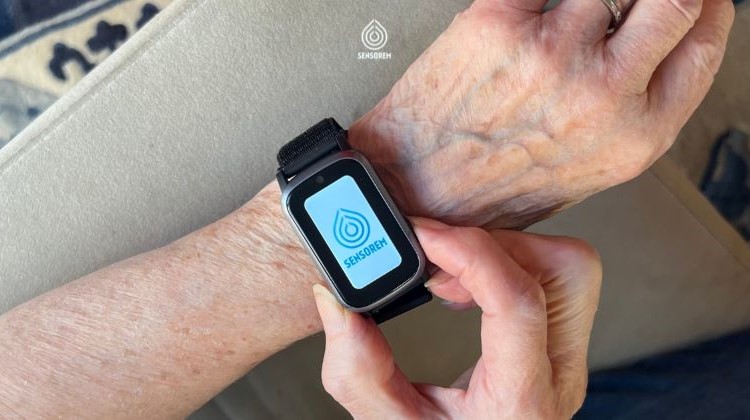
READ ABOUT HOW SENSOREM’S PERSONAL ALARM CAN HELP PERSONS SUFFERING FROM ALZHEIMER’S DISEASE
References
- [1] National Board of Health and Welfare. National guidelines for dementia care. https://www.socialstyrelsen.se
- [2] Alzheimer’s Society. Alzheimer’s disease. https://www.alzheimers.org.uk
- [3] NHS. Alzheimer’s disease – symptoms and treatment. https://www.nhs.uk
Read more: What is dementia? – 5 early signs of dementia – Life expectancy with Alzheimer’s – How does one die from Alzheimer’s? – Dementia tracker