
What is the disease progression of vascular dementia?
Vascular dementia is caused by reduced blood supply to the brain and is the second most common form of dementia after Alzheimer’s. The progression is typically divided into three stages and differs from Alzheimer’s in that decline often occurs in steps rather than gradually.
Vascular dementia is a type of dementia caused by reduced blood supply to the brain, often due to stroke or other vascular damage. The stages of vascular dementia and how the disease progresses can vary depending on the extent and location of these injuries.
Early stage
- Sudden onset: Unlike Alzheimer’s disease, which develops gradually, vascular dementia can have a sudden onset following a stroke or a series of small blood clots.
- Cognitive problems: Difficulties with planning, organising and decision-making may appear early. The person may struggle with complex tasks and show slowed thinking.
- Memory loss: Memory problems are less prominent than in Alzheimer’s but can still occur, particularly short-term memory.
Middle stage
- Motor problems: Balance and walking difficulties increase, raising the risk of falls. Small strokes can lead to paralysis or weakness in an arm or leg.
- Mood changes: Depression, anxiety and irritability are common. The person may become more apathetic or withdrawn.
- Language difficulties: Difficulty finding the right words or understanding speech becomes more pronounced.
Late stage
- Severe cognitive decline: Memory problems worsen and the person may struggle to recognise loved ones.
- Physical weakness: Motor problems become more severe and the person may need help with daily activities such as dressing or eating.
- Behavioural changes: Aggression, paranoia and hallucinations can occur.
- Loss of independence: The person becomes increasingly dependent on care and support.
The importance of seeking help
Vascular dementia is a complex disease. Early diagnosis and treatment can help slow the development of symptoms. Having a clear care plan and support from healthcare professionals, family and friends is essential for managing the progression as well as possible.
Read more about what vascular dementia is, about dementia in general and about related conditions such as Lewy body dementia.
Read more: Vascular dementia – Alzheimer’s disease – What is dementia? – Dementia tracker
Sensorem’s safety alarm has GPS positioning, medication reminders and automatic fall alarm
Sensorem’s personal alarm is an example of a technical aid specially developed for people with dementia. The personal alarm works outdoors and has built-in GPS positioning so that relatives can see the user’s position on a map in the Sensorem app. Relatives are automatically called by the personal alarm (two-way communication) if the user leaves a predetermined geographical area. The personal alarm also has medication reminders, which means that the watch emits a sound and tells the user that it is time to take their medication. The personal alarm can also alert automatically in the event of a fall with the built-in fall sensor.
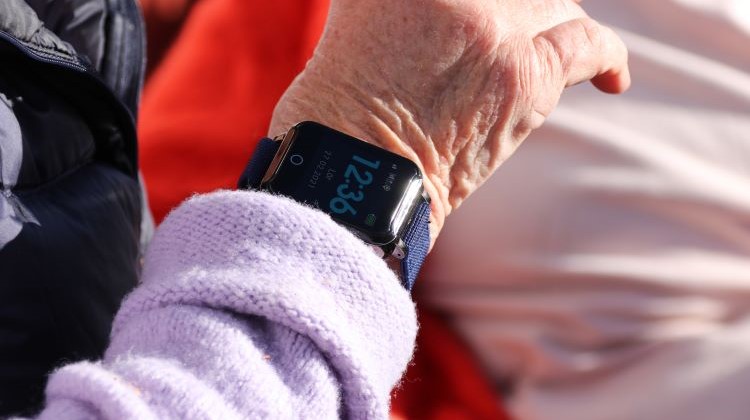
READ ABOUT HOW SENSOREMS PERSONAL ALARM CAN HELP WITH DEMENTIA
References
- [1] O’Brien JT, Thomas A. “Vascular dementia.” Lancet, 2015;386(10004):1698–1706. https://doi.org/10.1016/S0140-6736(15)00463-8
- [2] Alzheimer’s Society. Vascular dementia. https://www.alzheimers.org.uk
- [3] NHS. Vascular dementia – symptoms. https://www.nhs.uk