An Oxford University study shows that the shingles vaccine Shingrix may reduce the risk of dementia by up to 17 percent. The finding is one of the most significant in dementia research in recent years.
What does the study show?
A new study from Oxford University, published in Nature Medicine, indicates that the recently approved shingles vaccine Shingrix may reduce the risk of developing dementia.
Researchers analysed data from over 200,000 Americans, half of whom had received the Shingrix vaccine. The results showed that the risk of developing dementia within six years of vaccination was 17 percent lower in the vaccinated group, with an even more pronounced effect in women.
The link between Shingrix and dementia
The connection between the herpes zoster virus and dementia is not fully understood, but one theory is that the virus can cause inflammation in the brain that over time contributes to neurodegenerative processes. The Shingrix vaccine appears to counteract this effect.
What do the findings mean for older adults?
While the results are promising, further research is needed to establish the underlying mechanisms and confirm the link. However, for older adults considering the shingles vaccine, the findings provide an additional reason to discuss vaccination with their doctor.
Alzheimer’s disease and other forms of dementia still lack a cure – which makes preventive measures such as vaccination particularly interesting.
You can read more about the study at Nature Medicine.
Read more: What is dementia? – Alzheimer’s disease – Dementia tracker
Sensorem’s safety alarm has GPS positioning, medication reminders and automatic fall alarm
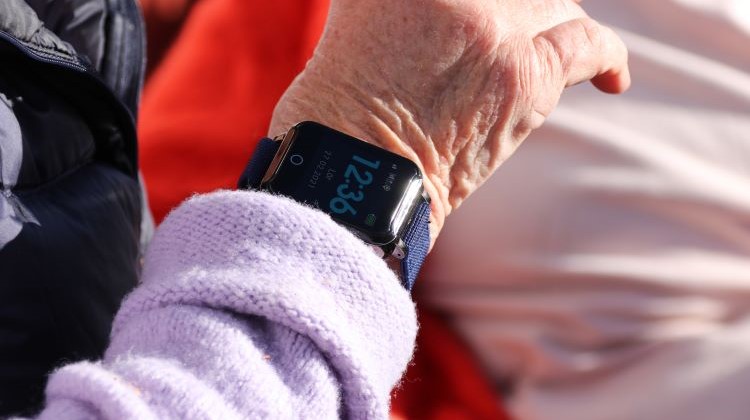
Sensorem’s personal alarm is an example of a technical aid specially developed for people with dementia. The personal alarm works outdoors and has built-in GPS positioning so that relatives can see the user’s position on a map in the Sensorem app. Relatives are automatically called by the personal alarm (two-way communication) if the user leaves a predetermined geographical area. The personal alarm also has medication reminders, which means that the watch emits a sound and tells the user that it is time to take their medication. The personal alarm can also alert automatically in the event of a fall with the built-in fall sensor.