
Personal alarm after hip fracture – staying safe at home
After a hip fracture the risk of falling again is high – and a second fall can be devastating. A personal alarm with automatic fall detection provides fast help even when the person cannot raise an alert themselves.
Why is the fall risk high after a hip fracture?
A hip fracture changes life significantly – but it does not remove the original cause of the fall. If anything, the risk of falling again increases for several reasons:
- Weakened muscles following surgery and bed rest
- Reduced balance that can persist long after rehabilitation ends
- Fear of falling causes people to move more cautiously, which paradoxically increases the risk
- Medication – pain relief and sleeping tablets can affect balance and coordination
- Dementia or cognitive impairment – common in the age group affected by hip fracture
Studies suggest that around half of those who have had a hip fracture experience another fall within a year (1).
The critical period at home
Coming home from hospital or a rehabilitation unit is a critical phase. The person is still weak, their movement pattern has changed and the home may not be optimally adapted. This is when most subsequent falls occur.
And if the person falls – what happens then?
If no one is home, if the person cannot reach the phone, if they are too weak to raise an alarm – they may lie on the floor for hours. Hypothermia, pressure sores and shock can develop quickly. That is exactly the scenario a personal alarm is designed to prevent.
What should a personal alarm do after a hip fracture?
After a hip fracture, the safety need places specific demands on the alarm. It should:
- Work outdoors – rehabilitation involves walks, and falls happen outside too
- Have automatic fall detection – the person may not be able to press a button if unconscious
- Have GPS positioning – family need to know where the person is, not just that an alert was raised
- Have two-way voice communication – ambulance crews and family need to be able to speak directly with the person
- Alert family directly – not only via a monitoring centre that adds response time
Council community alarms almost always work indoors only and have no GPS – they are not enough for someone who goes outside during rehabilitation.
Personal alarm as part of the discharge plan
Many NHS hospitals and local authorities recommend a personal alarm as part of the discharge plan after hip fracture. Family members should raise the question proactively if it is not mentioned – and not wait until another fall happens.
Questions to ask at discharge:
- Is a council community alarm available?
- Does it work outdoors?
- Does it have GPS if the person falls outside?
- Can family be alerted directly?
If the answer to any of the last three questions is “no” – a private personal alarm is an important addition.
Personal alarm for those at increased fall risk
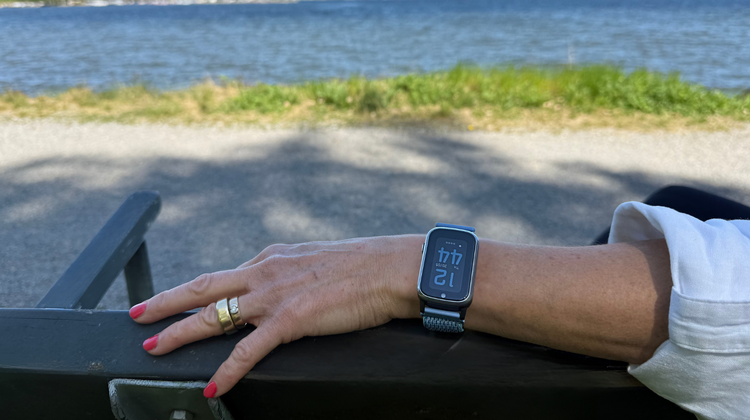
Sensorem’s personal alarm is designed for people with an increased risk of falling. It can be triggered manually or automatically if the person falls, and calls pre-set contacts with two-way voice communication through the watch’s built-in speaker. It works outdoors and has built-in GPS positioning, so you can always see where the person is in the Sensorem app.
READ ABOUT SENSOREM’S PERSONAL ALARM – SAFETY FOR THOSE AT INCREASED FALL RISK
More about hip fracture
Want to know more? Read more in our guides: What is a hip fracture? – Hip fracture in the elderly – risks and recovery – Hip fracture symptoms
References
- [1] NHS. Hip fracture – overview and recovery. https://www.nhs.uk/conditions/hip-fracture/