
How do automatic alarms work in fall incidents?
Falls are one of the most common causes of serious workplace injuries – and in lone working situations, consequences can be more severe because no one is nearby to respond. Automatic alarms solve the critical time-delay problem: help can be summoned without the person needing to act themselves.
The problem of delayed help in fall incidents
In a fall incident, the fall itself is rarely the biggest problem – it is the time that passes before anyone responds. Falls are among the most common lone working risks and are particularly serious where no colleague can intervene [1].
What is an automatic alarm?
An automatic alarm – often called a man-down alert – is triggered without the user needing to press a button. It activates when sensors detect:
- A sudden change in movement indicating a fall
- Absence of movement over a set period (inactivity alert)
The alarm is sent immediately to pre-set recipients via the built-in speakerphone and SMS notification. GPS position is shared automatically.
How it works in practice
- The watch detects a fall or triggered inactivity alert
- The alarm is sent automatically to contacts in sequence
- Two-way communication opens via the built-in speakerphone
- If no one answers, the call transfers to Sensorem’s alarm centre
- GPS position is shared in real time in the Sensorem app
Why this matters for lone working
Without an automatic alarm, you rely on the injured person being able to act – which after a fall is often not possible. HSE guidance and HASAWA 1974 require lone workers in high-risk situations to have a means of summoning help quickly [2]. Automatic man-down alerts are one of the most effective ways to meet this requirement. Read more about safety at the workplace for HR managers.
A personal alarm with man-down alert increases workplace safety
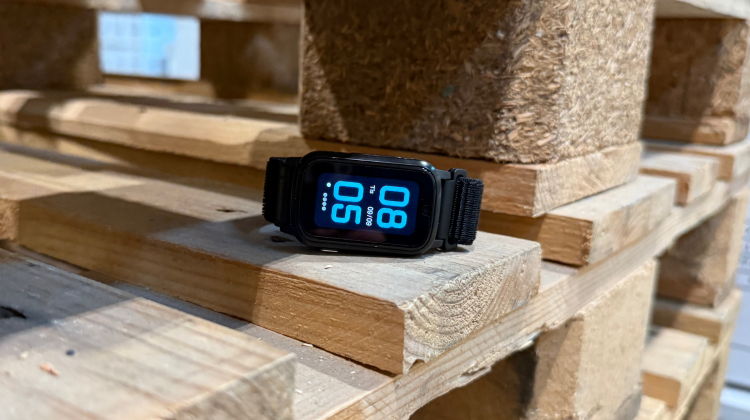
Sensorem’s personal alarm has an automatic man-down alert that calls alarm recipients via the watch’s built-in speakerphone with two-way communication. The alarm works outdoors and has built-in GPS positioning.
READ ABOUT SENSOREM’S PERSONAL ALARM FOR LONE WORKERS
Sources
-
-
- [1] HSE. Lone working. https://www.hse.gov.uk/lone-working/
- [2] Health and Safety at Work Act 1974. https://www.legislation.gov.uk/ukpga/1974/37/contents
-