
Private personal alarm without home care
You do not need home care to have a personal alarm. A private personal alarm can be ordered by anyone, delivered within 3 working days and ready to use immediately – without a needs assessment, waiting list or council approval.
What is a private personal alarm?
A private personal alarm is an alarm you buy and use completely independently of the council or home care services. You choose who the alarm calls – typically close family members – and do not need to go through any application process.
This is different from a council community alarm, which requires a needs assessment carried out by adult social care services and is linked to the council’s monitoring centre or care staff.
A private personal alarm is particularly well suited to you if you:
- Want safety and security without involving home care services
- Want the alarm to go directly to your family
- Are active and move around outdoors and need an alarm that works anywhere
- Do not meet the council’s criteria but still want increased security
- Want fast delivery without waiting for council processing
What is the difference between a private and council alarm in the UK?
| Council community alarm | Private alarm (Sensorem) | |
|---|---|---|
| Requires needs assessment | Yes | No |
| Works outdoors | No – indoor only | Yes |
| GPS tracking | No | Yes |
| Automatic fall detection | No | Yes |
| Alerts | Monitoring centre/care staff | Family directly |
| Two-way communication | Sometimes | Always |
| Medication reminders | No | Yes |
| Delivery time | Weeks/months | 3 working days |
| Cost | ~£4–7/week | From €21.25/month, all included |
How does the council alarm system work in the UK?
Council community alarm services – also called Lifeline, telecare or pendant alarms – are provided by local authorities under the Care Act 2014. To access one, you typically contact your council’s adult social care department, who will arrange a home assessment. If approved, a basic monitoring system is installed, usually connected to a landline or base unit in your home.
As the NHS notes, council-provided systems are basic. Key limitations:
- Indoor only – if you fall outside or leave the house, the alarm cannot reach you
- No GPS – your location cannot be tracked
- No fall detection – you must be able to press the button yourself
- Linked to a monitoring centre – a stranger assesses the situation, not your family
Different councils have different criteria, pricing and service levels, so availability and quality vary significantly across the UK.
Why do many people choose a private alarm?
More and more people choose private personal alarms – not just to avoid waiting lists, but because they offer features that council alarms lack:
- Works outdoors – on walks, in the garden, on holiday, anywhere in the UK
- GPS tracking – family can see your location in real time in the Sensorem app
- Geo-fence – you receive an alert if you leave a set geographical area (particularly useful for dementia)
- Automatic fall detection – raises an alert even if you cannot press the button
- Directly to family – no third party involved unless you want one
Many people choose to keep the council alarm indoors and add a private alarm for outdoor use. The council alarm covers the home – the private alarm covers the rest of the day.
Who can order a private personal alarm?
Anyone. There is no age limit, no diagnosis requirement and no application process. You can order for yourself, for a parent or for any other family member.
It is also very common for family members to take the initiative and order the alarm – not the user themselves. Many find it easier for an older person to accept wearing the alarm when it looks like an ordinary watch and does not obviously look like a care device.
How does Sensorem’s personal alarm work?
When the user presses the alarm button on the watch:
- Family members receive an SMS and alert notification with GPS position in the Sensorem app
- The watch automatically calls family members in a pre-set order
- Family and user can speak directly through the watch’s built-in speakerphone
- If no family member answers, the call connects to Sensorem’s monitoring centre (always open)
- The monitoring centre contacts the emergency services if needed
More about home care and personal alarms
Want to know more about how home care works in the UK, what it costs, or how to choose the right provider? We’ve put together a series of guides: What is home care? – How much does home care cost? – What does full home care mean? – How to choose home care – Personal alarm and home care
What does a private personal alarm cost?
Sensorem’s private personal alarm starts from €21.25/month with everything included – the watch, SIM card, GPS and access to the Sensorem app for family. No binding period.
Safety alarm with automatic fall detection for people with an increased risk of falling
Sensorem’s personal alarm is a technical aid specially developed for people who have an increased risk of falling. The personal alarm can automatically alert in the event of a fall and then call relatives using the watch’s built-in speakerphone with two-way communication. The personal alarm works outdoors and has built-in GPS positioning so that relatives can see the user’s position on a map in the Sensorem app.
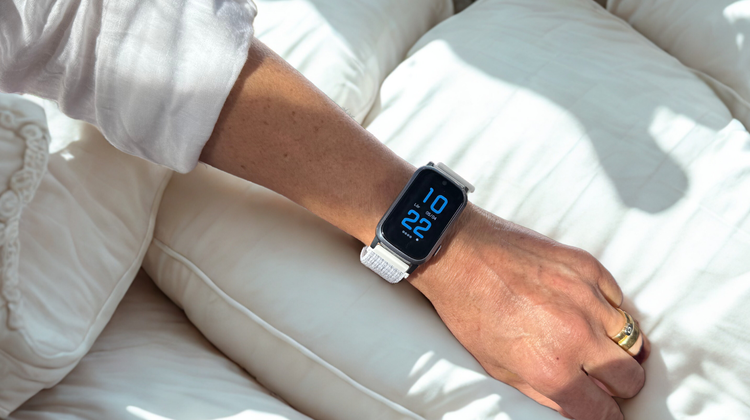
READ ABOUT HOW SENSOREM’S PERSONAL ALARM AUTOMATICALLY CAN DETECT A FALL
References
- [1] NHS. Personal alarms, monitoring systems (telecare) and key safes. https://www.nhs.uk/social-care-and-support/care-services-equipment-and-care-homes/personal-alarms-security-systems-and-keysafes/
- [2] GOV.UK. Find a telecare provider. https://www.gov.uk/guidance/find-a-telecare-provider
- [3] Which? How to buy the best personal alarm. https://www.which.co.uk
- [4] Care Act 2014. Adult social care – local authority duties. https://www.legislation.gov.uk/ukpga/2014/23/contents