
What Is a Cerebral Infarction?
A cerebral infarction – also called ischaemic stroke or infark cerebri – is the most common form of stroke. It occurs when a blood clot blocks blood flow to part of the brain. Brain cells begin to die within minutes. Rapid treatment is critical.
A cerebral infarction accounts for approximately 85% of all stroke cases. Compared to a brain hemorrhage, a cerebral infarction is more common and can be treated with clot-dissolving medication.
What is a cerebral infarction?
A cerebral infarction – sometimes written as infark cerebri in medical literature – occurs when a blood vessel in the brain becomes blocked by a clot formed locally (thrombosis) or travelling from elsewhere in the body (embolism) [1].
Common causes
- Atrial fibrillation, atherosclerosis, high blood pressure, diabetes, smoking, high blood lipids.
Symptoms
- Sudden weakness in the face, arm or leg (usually on one side)
- Difficulty speaking or understanding speech
- Visual disturbances, dizziness, severe headache
FAST test: Face – Arms – Speech – Time. Call 999 immediately!
Diagnosis and treatment
CT or MRI scan confirms diagnosis. Thrombolysis within 4.5 hours or mechanical thrombectomy [3,4]. Blood thinners, blood pressure medication and rehabilitation.
Link to dementia
Repeated infarctions can lead to vascular dementia [5].
Read more: What is a stroke? – Brain hemorrhage – Safety alarm after stroke – Vascular dementia
Safety alarm with automatic fall alarm can increase safety for people with an increased risk of falling
Sensorem’s personal alarm is an example of a technical aid specially developed for people who have an increased risk of falling. The personal alarm can automatically trigger the alarm in the event of a fall and then call relatives using the watch’s built-in speakerphone with two-way communication. The personal alarm works outdoors and has built-in GPS positioning so that relatives can see the user’s position on a map in the Sensorem app.
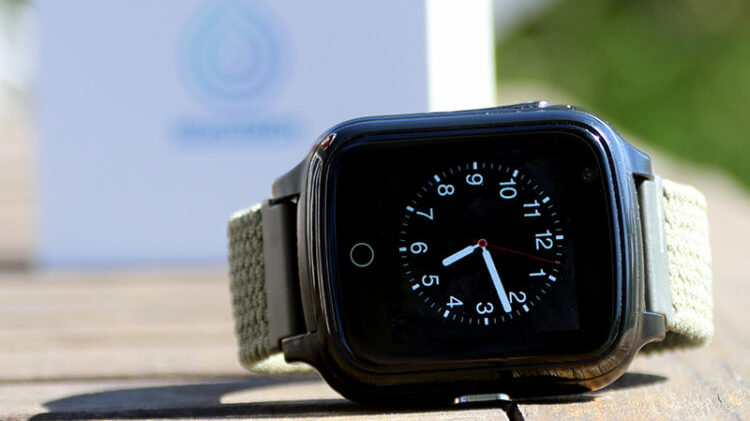
SENSOREM’S PERSONAL ALARM CAN INCREASE SAFETY AFTER A STROKE
References
- [1] Sacco RL et al. “An updated definition of stroke.” Stroke, 2006.
- [2] WHO. Cardiovascular risk factors, 2023.
- [3] Wardlaw JM et al. “Diagnosis of stroke subtype.” The Lancet Neurology, 2004.
- [4] Goyal M et al. “Endovascular thrombectomy.” The Lancet, 2016.
- [5] Gorelick PB et al. “Vascular contributions to cognitive impairment.” Stroke, 2011.