
Are Hallucinations Common in Dementia?
Hallucinations in dementia mean that the person sees, hears or experiences things that do not exist. This can be frightening both for the person affected and for their loved ones. Hallucinations are most common in Lewy body dementia but occur in several types of dementia. The right approach makes a significant difference.
What Are Hallucinations?
Hallucinations are sensory experiences without an external source – the person sees, hears, feels, smells or tastes something that does not actually exist. The experience is completely real to the person affected.
In dementia, visual hallucinations are the most common. The person may see people, animals or objects that no one else can see. Auditory hallucinations – voices or sounds – also occur, as do tactile hallucinations.
Hallucinations should be distinguished from illusions (misinterpretations of real sensory input) and delusions (fixed false beliefs). All three can occur in dementia but have different causes and require partly different responses.
How Common Are Hallucinations in Dementia?
Lewy body dementia – up to 80% of patients experience early and detailed visual hallucinations. This is a characteristic feature of the disease and can help with diagnosis [1].
Alzheimer’s disease – hallucinations occur in 10–30% of patients and typically appear in a later stage of the disease [1].
Vascular dementia – hallucinations can occur but are not as frequent as in Lewy body dementia. When they do happen, it is often due to damage in specific parts of the brain that affect perception [2].
Parkinson’s disease with dementia – visual hallucinations are common and can be worsened by Parkinson’s medications [2].
Why Do Hallucinations Occur?
Hallucinations in dementia occur when the brain’s nerve cells and the chemical signals between them deteriorate, leading to distorted or incorrect sensory input. Factors that can trigger or worsen hallucinations:
- Infections – urinary tract infections are a common trigger in older adults
- Dehydration – fluid loss significantly affects brain function
- Medications – certain drugs, including Parkinson’s medications and anticholinergics, can cause hallucinations
- Sensory impairment – reduced vision or hearing intensifies the tendency towards hallucinations
- Sleep deprivation – disrupted REM sleep is closely linked to hallucinations, especially in Lewy body dementia
- Environmental changes – new surroundings or disrupted routines can trigger episodes
How to Respond to Hallucinations
- Do not challenge – avoid trying to convince the person that their experience is not real. This creates anxiety without helping.
- Acknowledge the feeling, not the content – “I understand that feels frightening” works better than “There are no people there.”
- Investigate triggers – check whether the person has a fever, is thirsty, has received new medication or is in an unfamiliar environment.
- Create a safe environment – predictable routines and familiar surroundings reduce episodes.
- Contact a doctor if hallucinations are frequent, distressing or lead to dangerous behaviour.
Note: Antipsychotics are not recommended in Lewy body dementia – many patients react severely and can experience life-threatening side effects. Always consult a doctor first [2].
Sensorem’s Personal Alarm with GPS Positioning, Medication Reminder and Automatic Fall Detection
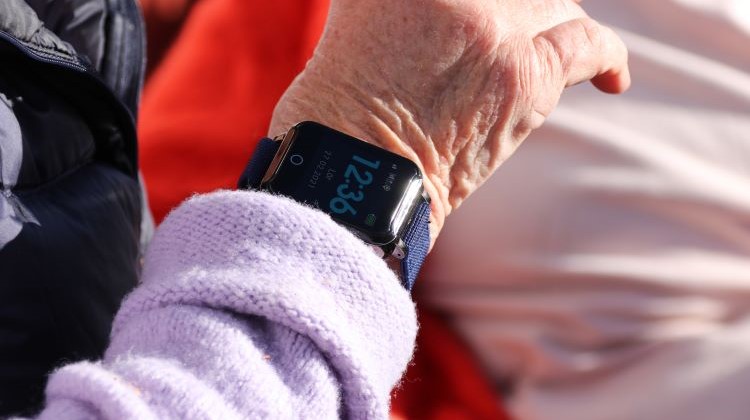
Sensorem’s personal alarm is an example of a technical aid specially developed for people with dementia. The alarm works outdoors and has built-in GPS positioning so that relatives can see the user’s location on a map in the Sensorem app. Relatives are automatically called by the alarm (two-way communication) if the user leaves a predetermined geographical area. The alarm also has a medication reminder and can alert automatically in the event of a fall with the built-in fall sensor.
READ ABOUT HOW SENSOREMS PERSONAL ALARM CAN HELP WITH DEMENTIA
References
- [1] Alzheimer’s Society. Hallucinations and dementia. https://www.alzheimers.org.uk
- [2] NHS. Dementia – symptoms and diagnosis. https://www.nhs.uk
- [3] National Institute on Aging. Hallucinations in dementia.
Read more: What is dementia? – Lewy body dementia – Alzheimer’s disease – Vascular dementia – Dementia tracker