Living with a Relative Who Has COPD – Advice and Safety
2026-05-25
Being a relative of someone with COPD often means walking a constant tightrope – between being there when needed and not taking over more than necessary. This article is for those who live close to someone with COPD and want to understand the disease better, recognise warning signs and know what to do.
What Does Living with COPD at Home Actually Mean?
COPD is a disease that changes slowly but affects daily life profoundly. For the person with COPD, it means adapting life to what the lungs can manage. For a relative, it often means following along with those adaptations – and carrying a worry that is sometimes hard to put into words.
Many relatives describe a constant vigilance: what happens if there is a sudden episode of breathlessness when no one is home? What do you do if a flare-up strikes in the middle of the night? That worry is understandable, but it does not have to be paralysing. Knowledge and preparation make a significant difference [1].
Signs That the Disease Is Getting Worse
One of the most important things a relative can learn is to recognise an exacerbation – an acute deterioration. It is not always dramatic at first, which makes it easy to wait too long before acting.
Common early signs of a flare-up:
Increased breathlessness compared to what is normal for the person
More coughing than usual, or coughing up discoloured mucus (yellow or green)
Increased fatigue and lower energy than on a typical day
Fever or chills – signs of infection
Every exacerbation damages the lungs a little further and raises the risk of future deterioration. Acting early – contacting a doctor promptly – is therefore important, not out of overprotection but to limit the damage [2].
What to Do During Sudden Breathlessness
A sudden episode of breathlessness can be frightening for the person experiencing it and for those nearby. Being prepared helps:
Stay calm – panic is contagious and makes breathlessness worse
Help the person into a comfortable seated position – leaning slightly forward with hands resting on the knees or a table (the tripod position) makes breathing easier
Make sure the inhaler is accessible – the fast-acting bronchodilator (often a blue inhaler) should be taken according to the treatment plan
Call 112 if the person does not respond to medication, if lips or fingernails turn bluish, or if breathlessness is extreme [2, 3]
If the person with COPD has a written treatment plan from their doctor – which is recommended – it is a good idea for relatives to be familiar with what it says. Ask to go through it together at the next appointment.
Anxiety – Not Only in the Person Who Is Ill
Anxiety is common in COPD, and that applies to relatives as much as to the person with the disease. Relatives of people with severe COPD often describe a constant background stress – a fear of leaving the person alone, of missing an emergency call, of not knowing what is happening when they are not there.
That stress is real and should be taken seriously. Research shows that relatives of seriously ill people often carry a heavier psychological burden than they acknowledge [1]. Important steps include:
Talking to a GP or counsellor if you feel exhausted
Making use of the carer support that local authorities are required to offer
Accepting help – it is not a betrayal of the person you care about
In Sweden, the Carer Helpline (Anhöriglinjen, tel. 0200-239 500) offers free support and advice for those caring for a relative [4].
How to Create Safety at Home
A few practical measures make a significant difference to safety in the home – and to your shared peace of mind:
Review the home together with an occupational therapist – a free home visit can be arranged through the municipality or GP surgery
Remove trip hazards such as loose rugs and cables in corridors and bathrooms
Install grab rails next to the toilet and in the shower
Keep an emergency number visible and easily accessible – not just in one room
Plan for emergencies – do you know who to call, and does the person with COPD know how to reach you quickly?
One of the hardest questions for relatives is: what happens if something occurs when I am not home? There is no perfect answer, but a personal alarm with automatic fall detection can significantly reduce that worry.
Support Is Available – You Do Not Have to Manage Alone
There is more support available than many people realise:
The COPD clinic at your local healthcare centre can provide information and advice for relatives as well as patients
The Swedish Heart-Lung Association (Riksförbundet HjärtLung) has local branches with support groups and training for relatives, www.hjart-lung.se [5]
Local authority carer support – local authorities are legally required to offer support to those caring for a relative. Contact your local authority’s care assessor
The Swedish Social Insurance Agency (Försäkringskassan) – if you need to take time off work to support a seriously ill relative, you may be entitled to carer’s allowance (närståendepenning) [6]
Personal alarm with automatic fall detection for people living with COPD
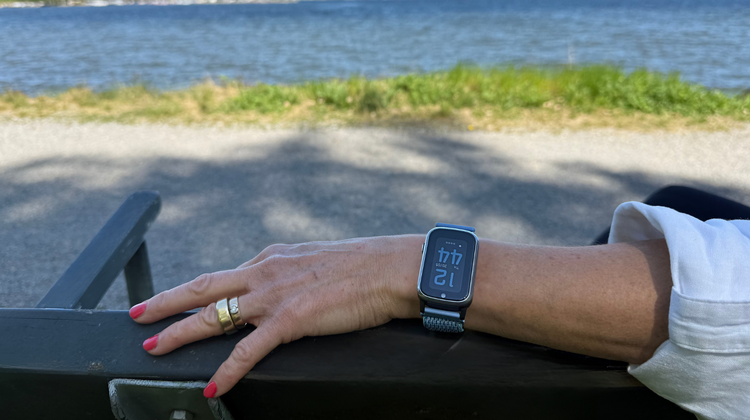
COPD increases the risk of falls due to fatigue, muscle weakness and low oxygen levels. Sensorem’s personal alarm is a device designed for exactly this situation: it automatically detects falls and calls relatives via the watch’s built-in speakerphone with two-way communication. The alarm works outdoors and has built-in GPS positioning.
Contact your GP if you suspect your COPD has worsened or if you are having difficulty breathing. Call 112 (or your local emergency number) if breathlessness is severe.