COPD Stages – Symptoms and Daily Life from Mild to End Stage
2026-05-15
COPD is divided into four stages – from mild to very severe – based on how much lung function has been lost. The stage a person is at determines the severity of symptoms, the treatment given and how daily life is affected.
How Is COPD Graded?
COPD is graded using an international system called GOLD – Global Initiative for Chronic Obstructive Lung Disease. The grading is based on spirometry, a lung function test that measures how quickly air can be exhaled. The measurement used is called FEV1 and is expressed as a percentage of the expected normal value for a healthy person of the same age [2].
The four stages are called GOLD 1 to GOLD 4, where GOLD 1 is the mildest and GOLD 4 is the most severe. It is important to know that the stages describe lung function – not exactly how unwell a person feels. Two people at the same stage can have very different symptoms and quality of life [1].
GOLD 1 – Mild COPD
At GOLD 1, lung function is close to normal. FEV1 is 80 percent or more of the expected value, meaning the lungs are still working relatively well.
Symptoms at this stage are often vague and easy to overlook:
Chronic cough, often with mucus production
Respiratory infections that take longer than usual to clear
Slight breathlessness during strenuous activity
Many people at GOLD 1 have not yet received a diagnosis. Symptoms are attributed to smoker’s cough or poor fitness rather than disease. Quality of life is generally good and daily life is minimally affected [3].
Despite the mild stage, stopping smoking now is crucial – it is the only measure that actually slows disease progression.
GOLD 2 – Moderate COPD
At GOLD 2, FEV1 has fallen to between 50 and 79 percent of the expected value. Airflow is noticeably reduced and symptoms begin to affect daily life more significantly.
Common symptoms at GOLD 2:
Clear breathlessness during walks and light activity
Daily cough with mucus production
Increased fatigue and reduced energy generally
Flare-ups (exacerbations) during respiratory infections
It is often at GOLD 2 that people first seek medical help – sometimes after a severe respiratory infection that does not resolve. Treatment with bronchodilator inhalers is typically introduced at this stage [2].
Participating in a pulmonary rehabilitation programme is particularly valuable at GOLD 2, before the disease has a chance to progress further.
GOLD 3 – Severe COPD
At GOLD 3, FEV1 is between 30 and 49 percent of the expected value. Lung function is now seriously impaired and affects the whole body, not just breathing.
Symptoms and challenges at GOLD 3:
Breathlessness during light activity, such as getting dressed or climbing stairs
Noticeable muscle weakness, particularly in the legs
Frequent and serious exacerbations that may require hospitalisation
Increased risk of depression and anxiety due to restricted mobility
Early-stage weight loss and malnutrition
At GOLD 3, COPD increasingly affects balance and reaction time. Fatigue, low oxygen levels and muscle weakness raise the risk of falls at home – during everyday moments such as getting up from a chair or going to the bathroom [4].
Many people at GOLD 3 require help from relatives and begin looking at assistive devices and home adaptations.
GOLD 4 – Very Severe COPD (End Stage)
At GOLD 4 – often referred to as end-stage COPD – FEV1 is below 30 percent of the expected value. The lungs can no longer oxygenate the blood adequately under normal breathing.
It is a serious condition that affects the whole living situation:
Breathlessness at rest or with minimal exertion
Many people are dependent on supplemental oxygen at home
Severe weight loss and muscle wasting (cachexia)
Swollen legs due to effects on the heart
Cognitive effects such as confusion and difficulty concentrating due to low oxygen levels
Recurring, life-threatening flare-ups
Fear of sudden breathlessness causes many people with severe COPD to restrict themselves to the home. The disease takes on a palliative character – care focuses on relieving symptoms and preserving quality of life rather than curing the condition [5].
Many patients at GOLD 4 know that time is limited, but these conversations are rarely raised in clinical settings. Relatives often carry a heavy burden of worry and may need support in their role [5].
How Quickly Does COPD Progress?
The course of the disease varies greatly between individuals. In someone who stops smoking early, progression can be slowed considerably – in some cases, life expectancy approaches that of someone who never smoked [6].
In someone who continues to smoke or has serious comorbidities such as heart failure or osteoporosis, the disease may progress more quickly. Recurring exacerbations are one of the most important risk factors for rapid progression – each serious flare-up leaves the lungs in a slightly worse state [2].
There is no method for predicting exactly how quickly COPD will progress in any individual, but regular spirometry follow-up provides a clear picture of whether lung function is declining faster than expected.
Can the Disease Be Slowed?
Yes – and it is never too late. Stopping smoking is the single most effective measure at any stage. Beyond that, regular physical activity has been shown to slow the loss of muscle strength and improve balance even at GOLD 3 and 4 [7].
Medication, vaccination, adequate nutrition and participation in pulmonary rehabilitation are other measures that, taken together, can make a significant difference to quality of life – even if they cannot reverse the lung damage already sustained.
COPD and Fall Risk – Particularly at GOLD 3 and 4
From GOLD 3 onwards, fall risk is an important factor to consider. The combination of low oxygen levels, fatigue, muscle weakness and medication side effects affects balance and increases the risk of falls – particularly at home. Read more in our article on COPD and fall risk.
Personal alarm with automatic fall detection for people living with COPD
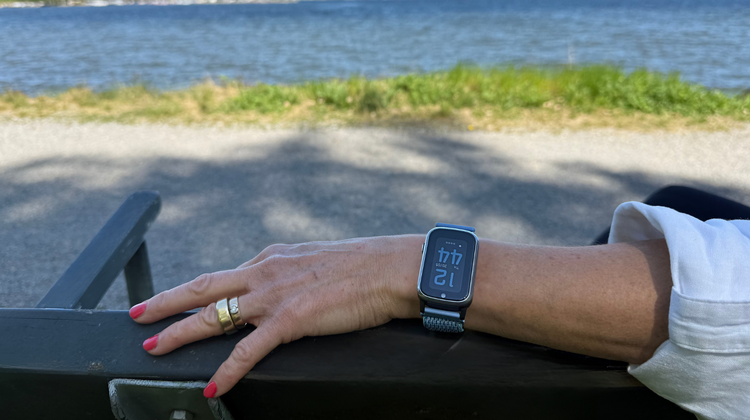
COPD increases the risk of falls due to fatigue, muscle weakness and low oxygen levels. Sensorem’s personal alarm is a device designed for exactly this situation: it automatically detects falls and calls relatives via the watch’s built-in speakerphone with two-way communication. The alarm works outdoors and has built-in GPS positioning.
Contact your GP if you suspect your COPD has worsened or if you are having difficulty breathing. Call 112 (or your local emergency number) if breathlessness is severe.
Read more: What is COPD? – the introductory article on symptoms and causes. And COPD and fall risk – how the disease affects balance and safety at home.