
5 scenarios where a personal alarm can save lives
In critical situations where every minute counts, a personal alarm can be decisive. Here are five scenarios where fast alerting can save lives in lone working.
When seconds make the difference
In lone working, the greatest risk is not always the accident itself – it is that no one discovers it in time.
When a person works alone, it can take a long time before anyone reacts. In some situations, these minutes can be decisive.
Here are five scenarios where a personal alarm can make the difference between life and death.
1. Fall with no way to raise the alarm
A facilities manager works alone in a stairwell and falls from a ladder. The person hits their head and cannot move or reach their phone.
Without an alarm, hours may pass before anyone discovers what has happened.
With a personal alarm, an automatic signal is sent immediately, allowing help to arrive significantly faster. Read about automatic alarms in fall incidents.
2. Threatening situation at a client’s home
A home care worker makes a home visit that suddenly turns threatening. The situation escalates quickly and the person needs help immediately.
Trying to make a phone call in such a situation is not always possible.
With a discreet alarm, help can be summoned without worsening the situation.
3. Sudden medical episode
A technician works alone outdoors and suffers an acute medical episode, such as a cardiac event.
Without any way to raise the alarm, the consequences can be serious.
A personal alarm with automatic functions can detect abnormal behaviour and send an alert even if the person cannot act themselves.
4. Accident in an isolated environment
A worker operates in an area with limited presence of others – for example in a basement, industrial building or outdoors.
If an accident occurs, locating the person quickly can be difficult.
With real-time GPS positioning, a personal alarm can direct emergency responders to the exact location immediately.
5. Evening and night-time working
An employee works late and is alone on the premises. An incident occurs, but no one is expected until the following day.
This can lead to long delays before help arrives.
With a personal alarm, an alert is sent immediately regardless of the time of day.
The common factor: time
In all these scenarios, one thing determines the outcome – how quickly help can reach the person.
In lone working there is always a risk that an incident goes unnoticed. This is where many employers underestimate the risks.
A personal alarm makes the difference when it matters
A personal alarm is not just a technical solution – it is a safety net for both staff and employer.
It enables:
- Immediate alert in incidents
- Real-time GPS positioning
- Help even when the person cannot act themselves
Read more about lone working accidents and violence and threats at work.
A personal alarm with man-down alert increases workplace safety
Sensorem’s personal alarm is specially developed to increase workplace safety. The alarm has an automatic man-down alert that calls alarm recipients via the watch’s built-in speakerphone with two-way communication. If no alarm recipient answers, the call is forwarded to Sensorem’s alarm centre. The personal alarm works outdoors and has built-in GPS positioning so alarm recipients can see the user’s position on a map in the Sensorem app. The personal alarm can be pre-programmed to alert silently.
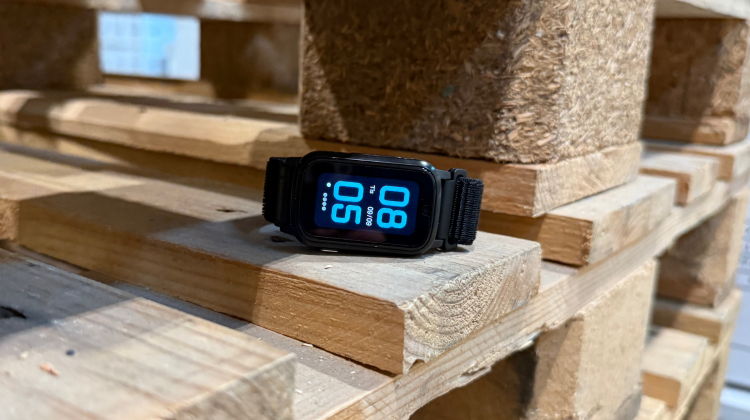
READ ABOUT SENSOREM’S PERSONAL ALARM FOR LONE WORKERS
Sources
- [1] HSE. Lone working. https://www.hse.gov.uk/lone-working/
- [2] Health and Safety at Work Act 1974. https://www.legislation.gov.uk/ukpga/1974/37/contents