
Do you know your staff are safe during the working day?
Many businesses lack real visibility into whether their employees are actually safe. With the right procedures and solutions, you can ensure help is always close at hand.
The uncomfortable truth: many employers do not know
Most employers assume their staff are safe during the working day. But in reality, full visibility into what is happening out in the field is often missing.
This is especially true in lone working situations. When an employee works alone, there is no one who can directly see if something goes wrong.
The question is therefore not just whether staff are safe – but whether you actually know they are.
Where do the risks arise?
Lone working risks can arise in many situations, often without warning:
- Work at a customer or service user’s premises
- Field work without colleagues nearby
- Evening or night-time working
- Work in isolated environments
In these situations an incident can develop quickly – without anyone noticing.
Common ways to “keep tabs” – and why they fall short
Many businesses believe they have control, but rely on approaches that do not hold up in practice.
Mobile phone – a common solution, but does not always work: the person may not be able to make a call, the battery may run out, there may be no signal.
Manual check-ins – relies on everything going to plan and does not capture acute situations.
Colleague monitoring – works in some cases, but not in lone working.
What is actually needed to know?
To ensure staff are safe during the working day, businesses need:
Real-time visibility – knowing where someone was an hour ago is not enough. The situation can change rapidly.
Ability to alert immediately – staff must be able to get help at once without needing to find their phone.
Support even when the person cannot act – in some situations an employee cannot raise the alarm themselves, for example after a fall or medical episode.
Clear procedures – everyone must know what to do, how to act and when to stop work. A documented lone worker risk assessment is the foundation [1].
Lone working demands more
In lone working, having a plan is not enough. Because no one can intervene directly, incidents can go unnoticed and response times are longer, it is critical that someone can always react fast. Read about employer health and safety duties and the lone working checklist.
From uncertainty to control
The difference between believing staff are safe and actually knowing they are lies in how quickly you can act when something happens.
Businesses that work proactively on safety have better oversight, faster response and fewer serious incidents.
Personal alarm – a way to get the answer
A personal alarm for lone workers makes it possible to create the safety many businesses currently lack. Read more about ensuring lone workers can always get help in time.
A personal alarm with man-down alert increases workplace safety
Sensorem’s personal alarm has an automatic man-down alert that calls alarm recipients via the watch’s built-in speakerphone with two-way communication. The alarm works outdoors and has built-in GPS positioning.
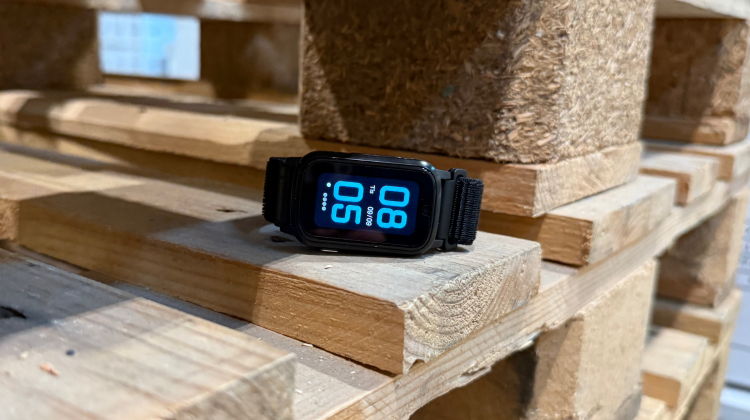
READ ABOUT SENSOREM’S PERSONAL ALARM FOR LONE WORKERS
Sources
- [1] HSE. Lone working. https://www.hse.gov.uk/lone-working/
- [2] Health and Safety at Work Act 1974. https://www.legislation.gov.uk/ukpga/1974/37/contents