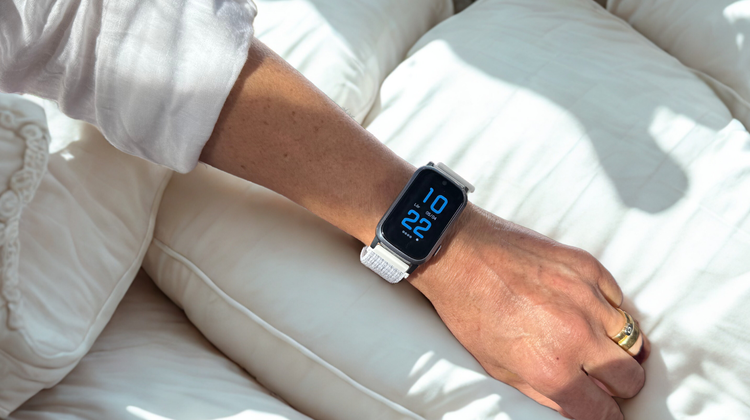
A stroke can have many different consequences and affects everyone differently. It can lead to both physical and cognitive after-effects, and social isolation after a stroke is not uncommon. A personal alarm can help both the user and their relatives feel safer in daily life.
Increased need for safety after a stroke
Every year, around 100,000 people in the UK and Ireland experience a stroke [1]. A stroke can have many different consequences and affects everyone differently. It can lead to both physical and cognitive after-effects – such as reduced mobility, speech difficulties and changes in memory – and social isolation after a stroke is common.
Sensorem’s personal alarm for the elderly can help both the user and their relatives feel safer in daily life, enabling them to continue moving around outdoors as normal.
Safety for the stroke survivor
For someone who has experienced a stroke, a personal alarm provides the reassurance of knowing they can always reach their relatives with the press of a button – wherever they are.
When the alarm button is pressed for three seconds, the smartwatch calls relatives in a predefined order. If no one answers, the call is connected to Sensorem’s alarm centre, which is open 24/7. All relatives also receive a notification in the Sensorem app that the user has triggered an alarm, including a real-time GPS position.
After a stroke, it is common to feel fear and anxiety due to physical and psychological after-effects. Fear of having an accident and being unable to contact relatives can make many people reluctant to go outdoors. A personal alarm means help is always available when needed – whether at home, outside or on holiday.
Personal alarm with discreet design
With a stylish and discreet design and a choice of wristbands, the smartwatch is not identifiable to others as a personal alarm. This means the user can feel comfortable wearing it every day.
Safety for relatives
As a relative of someone who has had a stroke, it is common to feel stressed about not being able to do enough. With Sensorem’s personal alarm, relatives can feel confident knowing that the stroke survivor can always contact them, and that they will be notified if an accident occurs.
With the smartwatch’s built-in speakerphone with two-way communication, relatives can also call the watch directly – meaning they can always reach the user, even if they have forgotten their mobile phone or the battery has run out.
The GPS function gives relatives added peace of mind, as they always receive information about where any accident has taken place.
Sensorem’s personal alarm features GPS, medication reminders and automatic fall detection
Sensorem’s personal alarm for the elderly is a technical aid specifically developed for people with a heightened risk of falling. The alarm works outdoors and has built-in GPS positioning so that relatives can see the user’s location on a map in the Sensorem app. Relatives are automatically called by the alarm (two-way communication) if the user leaves a pre-set geographical area. The alarm also features a medication reminder – the watch emits a sound telling the user it is time to take their medicine. The alarm can also detect falls automatically using the built-in fall sensor.